 SantaFeToday.com Santa Fe’s Hometown News

NORTHEAST |
|
|
NORTHEAST CATCHES OF THE WEEK |
|
|
 |
|
Hopewell Lake: Brandon and his daughter caught and released more than 30 brook and rainbow trout, keeping four, using jigs tipped with nightcrawlers and wax worms on Dec. 20. “I took my daughter out for our 2025-2026 ice fishing season, and it did not disappoint,” Brandon said. “We got to Hopewell Lake at 7:30 a.m. and called it a day at noon.” |
 |
|
Monastery Lake: Joseph Calabaza Jr., age 8, of Albuquerque, caught several rainbow trout, including an 18-incher, using mealworms on Dec. 13. |
 |
|
Pecos River: Joseph caught a rainbow trout using live bait near the Jamie Koch Pavilion on Dec. 1. |
 |
|
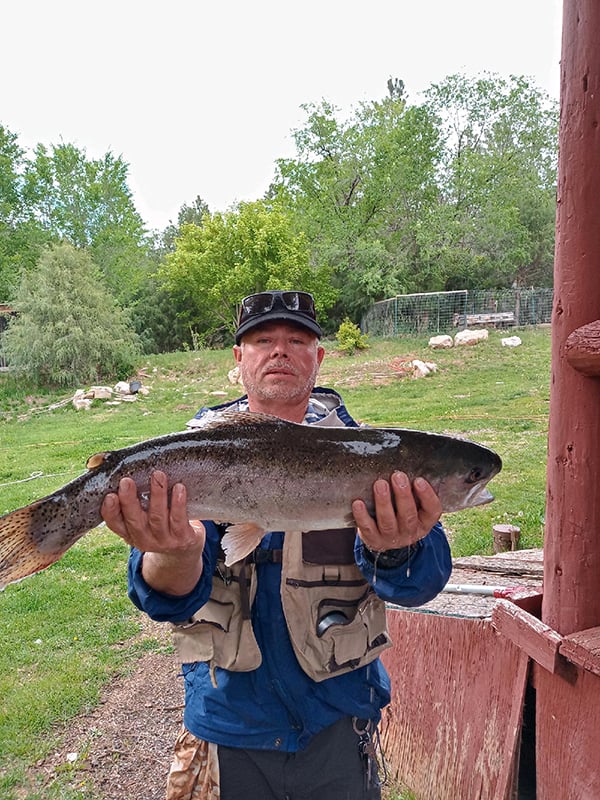
Pecos River: Kyle Druktenis caught a personal-best 27-inch rainbow trout that was 7½ inches around using a muddler fly on Dec. 20. “My buddy took a swim for this one,” he said. “The fight took at least five minutes to catch.” |
|
|
NORTHEAST FISHING REPORT |
|
|
|
Cimarron River: Streamflow near Cimarron Wednesday morning was not measured due to ice. Eagle Nest Lake: The most recent report was received Dec. 18. At that time, fishing for trout was good when using jigs and PowerBait. For updated lake conditions, visit the park’s webpage or call the park office at 575-377-1594. Hopewell Lake: The most recent report was received Dec. 18. At that time, ice fishing for trout was very good when using Swedish pimples and tungsten jigs tipped with wax worms. Monastery Lake: Fishing for trout was slow to fair when using mealworms. The lake is part of the Department’s Open Gate Program. Please visit our website for more information about this property. Pecos River: Streamflow near Pecos Wednesday morning was 32.6 cfs. Fishing for trout was slow when using size-16 dry flies. Fishing for trout was fair to good when using muddler flies and live bait. Red River: Streamflow below the Red River Hatchery on Wednesday morning was 41.2 cfs. Rio Grande: Streamflow below the Taos Junction Bridge on Wednesday morning was 649 cfs. Rio Hondo: Streamflow near Valdez Wednesday morning was 7.5 cfs. Rio Mora: Streamflow near Terrero Wednesday morning was 6.33 cfs. Rio Pueblo: Streamflow near Peñasco Wednesday morning was not measured due to ice. Ute Lake: The most recent report was received Dec. 18. At that time, fishing for walleye, crappie, catfish and white bass was fair to good when using 3- and 4-inch Gulp minnows and jigs with green blades.
We received no reports for the following waterbodies over the past three weeks: Cabresto Lake, Clayton Lake, Charette Lakes, Conchas Lake, Cowles Ponds, Coyote Creek, Eagle Rock Lake, Gallinas River, Harris Pond, Lake Alice, Lake Maloya, Los Pinos River, Maxwell Lake 13, Morphy Lake, Red River City Ponds, Red River Hatchery, Rio Costilla, Santa Cruz Reservoir, Shuree Ponds, Springer Lake, Storrie Lake and Stubblefield Lake. |
|
|
NORTHWEST |
|
|
NORTHWEST CATCH OF THE WEEK |
|
|
 |
|
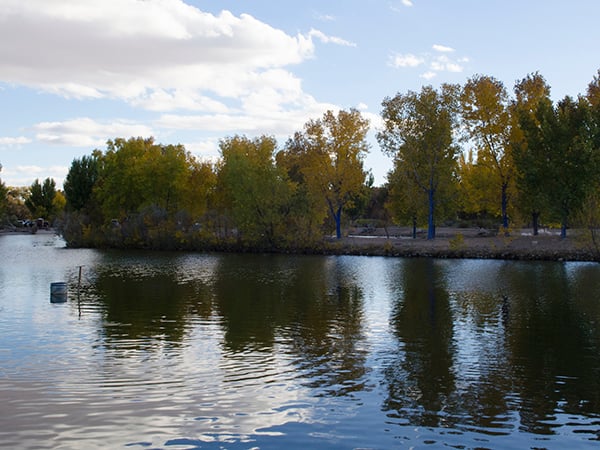
Fishing for rainbow trout has been very good recently at Tingley Beach when using Garlic PowerBait and pale green Gulp on Carolina rigs with No. 6 hooks. |
|
|
NORTHWEST FISHING REPORT |
|
|
|
Abiquiu Lake: Contact the Abiquiu Lake Main Office at 505-685-4371 for updated lake conditions and closure information. Albuquerque Area Drains: Fishing for trout was good when using Rainbow Glitter PowerBait. Animas River: Streamflow below Aztec Wednesday morning was 281 cfs. Bluewater Lake: Visit Bluewater Lake State Park’s webpage or call 505-876-2391 for more information. The most recent report was received Dec. 18. At that time, fishing for tiger muskie and trout was fair to good when using 6thSense spinners. El Vado Lake: The lake is open to boating and angling with a primitive boat ramp available at the Dam Day Use Area, as well as the main (concrete) boat ramp and courtesy dock at El Vado Lake State Park. For more information, visit El Vado Lake State Park’s webpage or call 575-588-7247. Fenton Lake: The most recent report was received Dec. 18. At that time, the lake had a layer of ice covering 90% of its surface, with a small area of open water in the center that cannot be reached from shore. Jemez Waters: Streamflow near Jemez Wednesday morning was 15.4 cfs. Rio Chama: Streamflow below El Vado Lake Wednesday morning was 99.8 cfs; streamflow below Abiquiu Lake Wednesday morning was 89.5 cfs.Please remember, from the river-crossing bridge on U.S. Highway 84 at Abiquiu upstream 7 miles to the base of Abiquiu Dam is special trout waters with a bag limit of only two trout. Rio Grande: Streamflow at Albuquerque Wednesday morning was 702 cfs. San Juan River: Streamflow near Archuleta Wednesday morning was 280 cfs. Fishing for brown trout was very good when using RS2 and Grey Midge flies in the quality waters. Seven Springs Kids’ Pond: The most recent report was received Dec. 11. At that time, fishing for trout was very good when using worms. Anglers reported that the pond is approximately half-frozen, though the fish continue to bite. If you catch a native Rio Grande chub in the Kid’s Pond, please do not leave it on the bank; return it to the water where it can survive as part of our native ecosystem. Tingley Beach: The most recent report was received Dec. 18. At that time, fishing for rainbow trout was very good when using Garlic PowerBait and pale green Gulp on Carolina rigs with No. 6 hooks.
We received no reports for the following waterbodies over the past three weeks: Albuquerque Area Drains, Brazos River, Canjilon Lakes, Cochiti Lake,Grants Riverwalk Pond, Heron Lake, Jackson Lake, Laguna del Campo, Lagunitas Lakes, Lake Farmington, Liam Knight Pond, McGaffey Lake, Navajo Lake, Rio Cebolla, Riverside Park Pond (Aztec Pond #1), San Gregorio Lake, Tiger Park Reservoir and Trout Lakes. |
|
|
SOUTHWEST |
|
|
SOUTHWEST CATCH OF THE WEEK |
|
|
 |
|
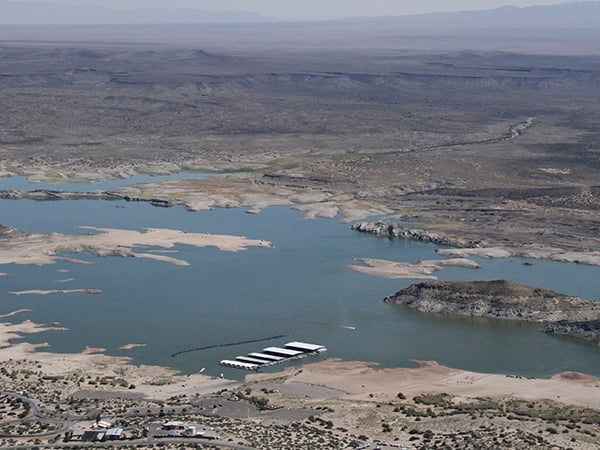
Fishing for catfish has been good when using chicken recently at Elephant Butte Lake. |
|
|
SOUTHWEST FISHING REPORT |
|
|
|
Bear Canyon Lake: Fishing conditions have been adversely affected in the aftermath of the Trout Fire. Elephant Butte Lake: The most recent report was received Dec. 18. At that time, fishing for catfish was good when using chicken. Gila River: Streamflow near Gila Wednesday morning was 59.9 cfs. Gila Waters: Streamflow near Gila Hot Springs Wednesday morning was 48.1 cfs. Glenwood Pond: The most recent report was received Dec. 18. At that time, fishing for trout was good when using PowerBait. Quemado Lake: The lake is currently closed due to an algal bloom. It will reopen when the New Mexico Environment Department advises that the lake is safe for public use. For more information, visit the Gila National Forest website. Rio Grande: Streamflow below Elephant Butte Dam on Wednesday morning was 0.77 cfs.
We received no reports for the following waterbodies over the past three weeks: Bill Evans Lake, Caballo Lake, Escondida Lake, Lake Roberts, Percha Dam, Rancho Grande Ponds, Snow Lake, Trees Lake and Young Pond. |
|
|
SOUTHEAST |
|
|
SOUTHEAST CATCHES OF THE WEEK |
|
|
 |
|
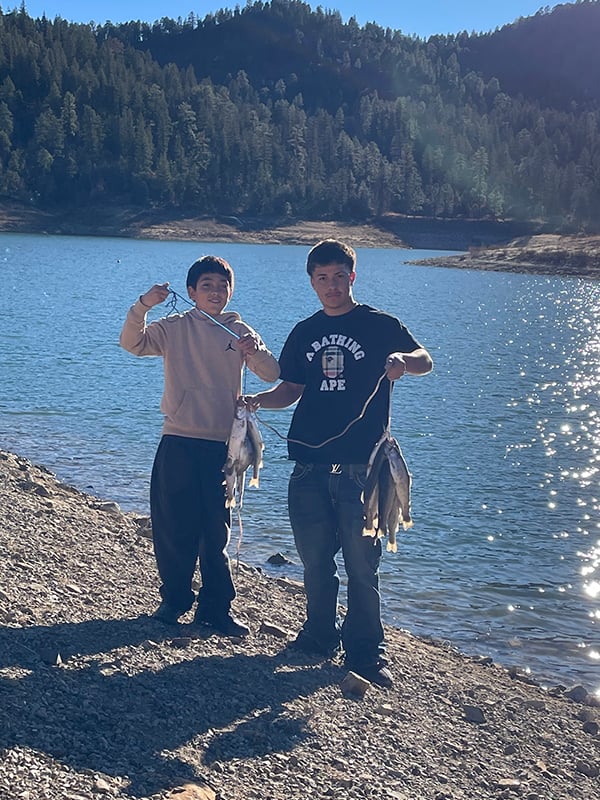
Grindstone Reservoir: Giovanni and Jared Chavez, along with their grandfather, caught their limits of trout using Rainbow PowerBait on Dec. 12. Their dad made sure to keep the hooks baited and fish on the stringers. |
 |
|
Lake Van: Nathaniel Mascarenas caught a 14-inch rainbow trout, his personal best this year, using Green and Yellow Garlic PowerBait on Dec. 20. |
|
|
SOUTHEAST FISHING REPORT |
|
|
|
Alto Lake: The most recent report was received Dec. 18. At that time, fishing for trout was fair to good when using multicolored Kastmasters, worms and orange-and-yellow-swirl Garlic PowerBait. Berrendo Creek: Please visit the Open Gate webpage for more information on this property. Black River: Streamflow at Malaga Wednesday morning was 8.9 cfs. The most recent report was received Dec. 4. At that time, fishing for flathead catfish was slow to fair when using shad chunks. Bonito Lake: The most recent report was received Dec. 18. At that time, fishing for trout was very good when using a variety of PowerBait. Only fishing activities are permitted at Bonito Lake. Carlsbad Municipal Lake: The most recent report was received Dec. 18. At that time, fishing for trout was slow when using a variety of baits. Grindstone Reservoir: Fishing for trout was very good when using Rainbow PowerBait. Grindstone Reservoir is currently open for fishing. Due to changing wildlife impact closures, please see the Grindstone Reservoir Webpage before planning a visit. Oasis Park Lake: The most recent report was received Dec. 18. At that time, fishing for trout was very good when using PowerBait. Lake Van: Fishing for trout was very good when using Green or Yellow Garlic PowerBait. Pecos River: Streamflow below Sumner Lake Wednesday morning was 20.1 cfs. Perch Lake: The most recent report was received Dec. 18. At that time, fishing for trout was slow to fair when using Pautzke Fire Balls. Rio Ruidoso: Streamflow at Hollywood on Wednesday morning was 4.22 cfs. Fishing conditions will be adversely affected for an extended period of time due to recent flooding in the area.
We received no reports for the following waterbodies over the past three weeks: Bataan Lake, Blue Hole Park Pond, Bosque Redondo Lake, Bottomless Lakes, Brantley Lake, Chaparral Park Lake, Corona Pond, Dennis Chavez Pond, Estancia Park Lake, Eunice Lake, Green Meadow Lake, Greene Acres Lake, Harry McAdams Park Pond, Jal Lake, Lake Van, Ned Houk Ponds, Oasis Park Lake, Rio Bonito, Rock Lake Hatchery Kids’ Pond, Santa Rosa Lake, Spring River Pond, Sumner Lake and Timberon Ponds. |
|
|
TIPS, TRICKS AND STORIES |
|
|
Elementary Fishing — Bring ’Em Home Fit to Eat
|
|
By Joseph D. Bates Jr.
Editor’s Note: This week, the Department is turning back the clock 55 years to the November-December 1970 edition ofNew Mexico Wildlife for some tips on how to prepare your catch once you’ve reeled it in, making it easier to keep them fresh.
Good recipes and expert cooks don’t add up to tasty fish dishes if fishermen spoil their catch before they get it home. The finest fish ever caught may be as tasteless as damp cardboard if he’s been allowed to slosh around in the water in the bottom of a boat for part of a day — or if he’s been left lying in the sun, especially when we’ve forgotten to clean him.
If you hanker for flavorful fish dishes that really are delicious, give the cook a fair chance. Keep your catch cool and dry; clean the fish as soon as possible, and get them to the refrigerator, the freezer or the skillet as quickly as you can.
This can be done even under adverse conditions. Once I wanted to bring home a pair of beautiful, big brook trout caught on a wilderness lake, but the trip back to civilization would take two days and we had no refrigeration. We cleaned the fish immediately, wiped them dry and rolled them inside and out in corn meal. Then, while still cool from the water, we wrapped them tightly in several thicknesses of newspapers. The corn meal helped to keep them dry and prevented their sticking to the paper. We kept them stored in the coolest places, and they were as tasty as freshly caught ones when served a few days later.
Nowadays we have portable refrigerators which we often take along anyway, even on wilderness trips. Plastic bags and the corn meal idea keep fish fresh in the ice boxes, and prevent them from contacting other foods. If the fish are prepared for cooking before rolling them in the meal, all that is necessary later is to pop them into a hot skillet. Many fishermen consider creels a nuisance and prefer to keep the catch in plastic bags, even when temporarily carried in the game pockets of fishing jackets. |
 |
|
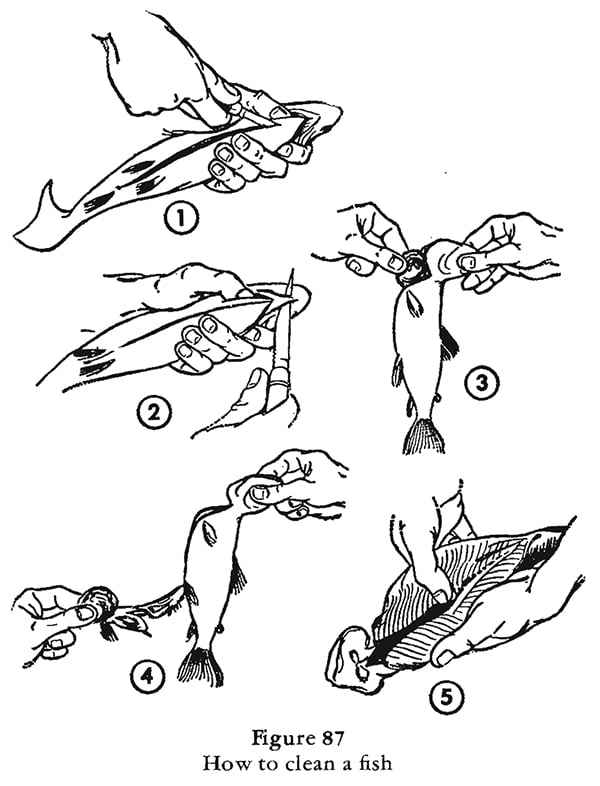
Cleaning them is easy! After catching them, take a break and clean the fish as soon as possible. A small, sharp sheath knife helps. My favorite has a four-inch blade with grooves on the top for scraping off scales. Hold the fish, belly up, in the palm of your hand, with thumb and forefinger in the gills so you’ll have a good grip. Slit the skin open from vent to gills, and make a cross cut at the head to sever the lower junction of the gills from the skin. Get a good grip on the gills and pull backward, thus pulling out all the gills and the “innards.” If part of any gills are left in, pull these out too, because they would hasten spoilage.
With this done, you’ll see a black streak down under the backbone. Scratch this with the point of the knife to slit the membrane which covers it. Then use your thumbnail to push out all the dark material. Since this also hastens spoilage, be sure it’s all removed, with any membrane remnants along with it. Scale the fish if necessary. You can postpone this until later but, if you use the corn meal treatment, it’s better to do it now. Finally, wipe the fish as dry as possible, and store it where it’s cool.
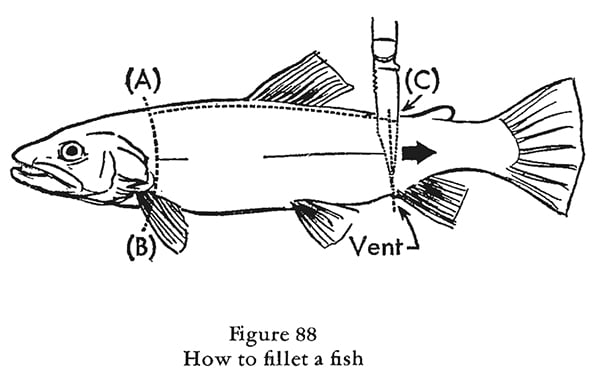
How to fillet fish If you wish to cut the meat off the bones to obtain fillets, it’s not necessary to clean the fish if this is done fairly promptly. Lay the fish on a flat surface and make a cross cut just back of the gill covers from “A” to “B,” as shown in drawing 88. The cut is made all the way down to the backbone at the top of the head, and you’ll get most meat by sloping the knife slightly forward, just back of the bony part of the head. The depth of the cut grows less as you cut down to the neck — just deep enough to slice the flesh but not enough to cut into the body cavity.
Next, make a deep cut from this one along the top of the back, as close to the dorsal fin as possible. Slice this down to the backbone. Now, at point “C,” insert the knife with blade fiat and pointing backward so you can push it through the flesh to the vent. To get all the flesh possible, let the knife follow along the backbone and slice backward until the back of the fillet is sliced free. |
 |
|
Your fingers now can pull the flesh near the head away from the row of spines which includes the dorsal fin. Holding the meat off the ribs. As the fillet is cut free, it is easy to cut along the ribs down to the belly of the fish. A few slices along the ribcage will free the fillet and, if the job has been done properly, nearly all the meat will come off with the fillet.
Do the same on the other side, and you have two fillets. All that’s left is the head and tail, connected by the skeleton, with the body cavity untouched. While we sometimes remove the innards (as described above) and pop the rest into the chowder pot, usually these remains are of use only to the family cat. (You probably could have filleted two or three fish in the time it took to read this!) |
 |
|
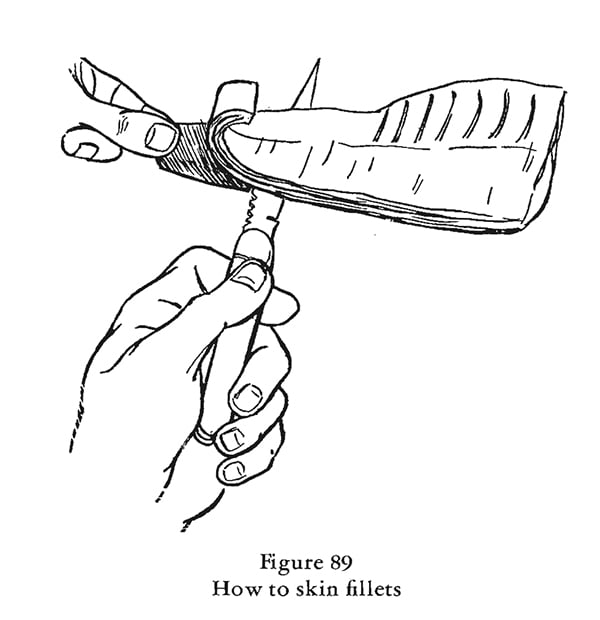
How to skin the fillets I’ve watched salt water charter-boat captains skin fillets; they can do it in seconds. With a sturdy, sharp, narrowbladed knife whose blade is a little longer than the fillet is wide, it shouldn’t take much longer, even for a beginner. Lay the fillet, skin side down, on a flat surface. Starting at the tail end, make a small slice along the inside of the skin to start to separate the meat from the skin. Holding this small end of free skin, lay the knife flat along the inside of the skin and push it forward with a slight sawing motion. A flat cut will make the knife follow along the skin to slice the skin free with no meat left on it. (Some people use pliers to hold the end of the skin, but I’ve never seen experts bother with them.) A glance at drawing 89 should quickly show how this is done. |
|
|
|
Remember to let us know how your fishing trip goes! Share your tips, tricks and stories with your fellow anglers by filling out the iFish form and let’s help the next generation of anglers find success. If you would like to submit a story for Tips, Tricks and Stories, please email Communications Director Darren Vaughan atDarren.Vaughan@dgf.nm.gov. |